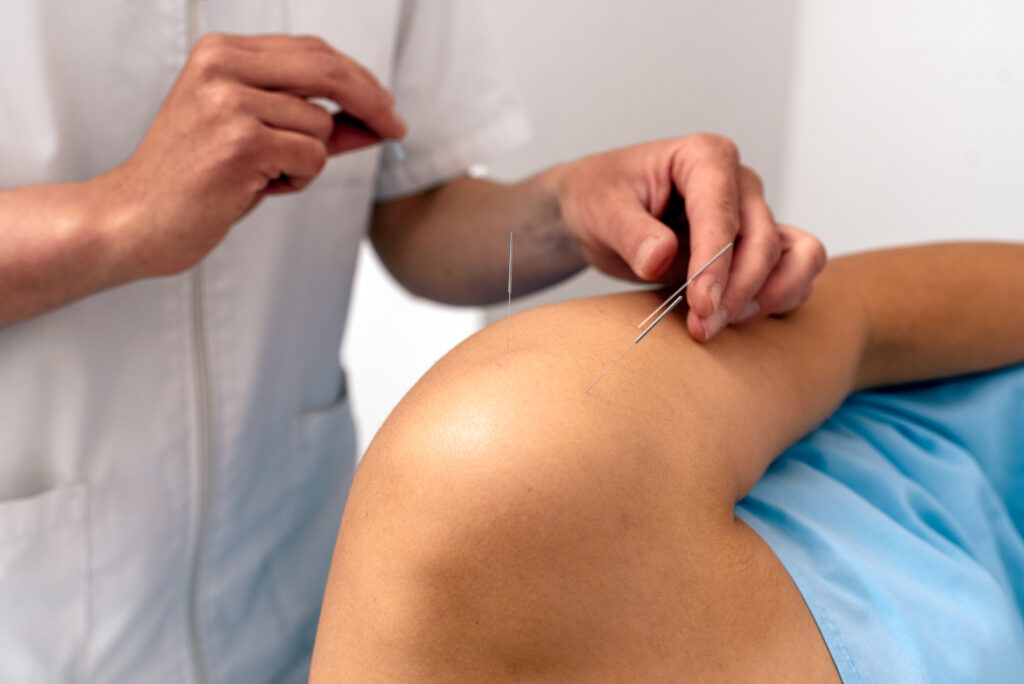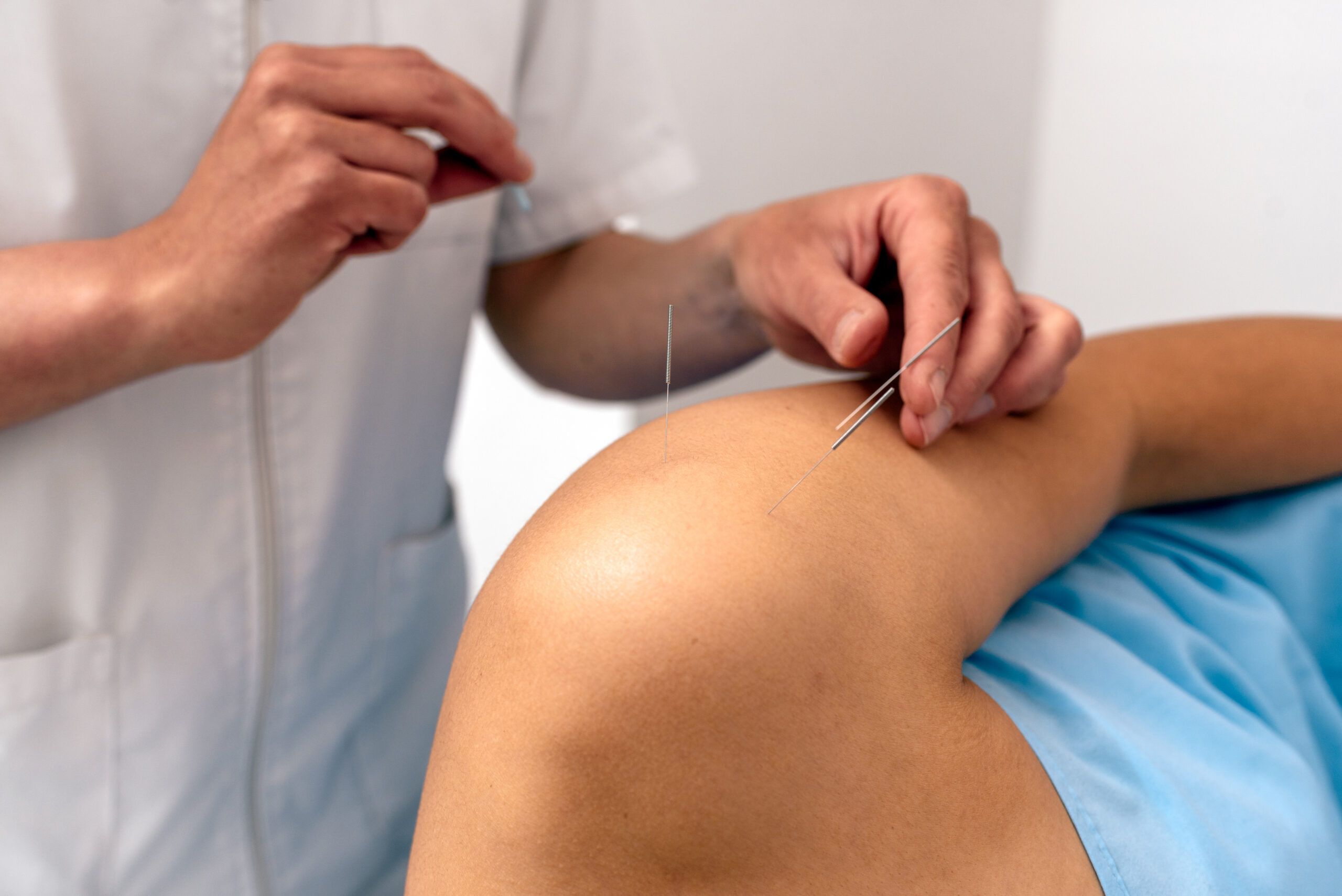
Dry needling usually hurts less than people expect. Most patients feel nothing or maybe a quick pinch as the needle goes in, then a deep ache or a brief muscle twitch when it reaches the tight spot. Afterward, a day or two of soreness at most is normal. Sharp pain that lingers is not.
Here is what most people are not told: the needle is rarely the part you notice. Dry needling uses solid needles far thinner than the hollow ones used for a flu shot or a blood draw, so the skin barely registers them. The muscle underneath is a different story. That is where you feel it, and that is where the work happens.
What dry needling feels like, moment by moment
Every body is different, but the sensations tend to arrive in the same order.
- Going in. A light tap or a quick pinch. Some people feel nothing at all.
- Finding the spot. When the needle reaches a tight band of muscle, known as a trigger point, you may feel a deep ache, pressure or a cramping grip. It is a dull, muscular feeling rather than a sharp one.
- The twitch. The muscle often gives a quick, involuntary jump called a local twitch response. It can be startling the first time, it lasts a second or two, and it usually means the needle has found the right spot.
- Feeling it somewhere else. A needle in your shoulder can echo up into your neck or head. This is called referred sensation, and it often matches the pain that brought you in.
It also tends to get easier. An irritated muscle reacts more strongly in the first session than it does once it has started to settle.
The soreness afterward, and what to do about it
Expect the treated muscles to feel sore for a day or two, much like the day after an unfamiliar workout. A small bruise or a drop of blood at a needle site is common too. Neither means anything went wrong.
Gentle movement helps more than rest. Walk, use the muscle normally, and add heat if it feels stiff. Most people go straight back to their normal day.
The research backs this up. When researchers collected reports on more than 20,000 dry needling treatments from 420 physical therapists, about a third involved a minor side effect, most often a little bleeding, bruising or discomfort during treatment. Serious problems were rare, at fewer than 1 in 1,000 treatments, according to a 2020 study in the International Journal of Sports Physical Therapy.
If you are nervous about needles
You are in good company, and it is worth saying so at the start, because it changes how we work. We can use fewer needles, begin in a less sensitive area, leave the needles still rather than moving them, and mix in hands-on treatment so the session is not all needles. You can ask us to stop at any point.
Hina Sheth, founder of Rebalance PT and certified in dry needling, often tells nervous patients: “Dry needling is not meant to hurt. Most people feel a slight pinch or nothing at all, and if anything ever feels sharp, tell us and we stop.”
When pain is not normal
Soreness that fades over a day or two is expected. Call us, or your doctor, if you notice any of these:
- Sharp or burning pain that does not settle once the needle is out
- Pain that gets worse over the following days instead of better
- Redness, heat or swelling around a needle site
- Shortness of breath or chest pain after needling near the chest or upper back, which needs urgent medical attention
Who should check first
Dry needling is not right for everyone. Tell your therapist if you are pregnant, take blood thinners, have a bleeding disorder or a weakened immune system, or have a strong fear of needles. None of these automatically rules it out, but each one changes the plan.
So, is it worth it?
For the right problem, yes. Dry needling is most useful for pain that comes from muscle, like stubborn neck and shoulder tension or tightness that keeps coming back, and it works best as one part of a plan rather than a stand-alone fix. At Rebalance we pair it with hands-on manual therapy and exercise, because a needle can quiet a muscle, but only movement teaches it to stay that way.
If you are weighing it up against acupuncture, we explain how dry needling differs from acupuncture in a separate guide.
We see patients across Philadelphia and the Main Line, with clinics in Center City and Narberth. If you are curious about dry needling but unsure whether it suits your problem, book a free 15-minute phone consultation. It is a no-pressure call to talk it through first.