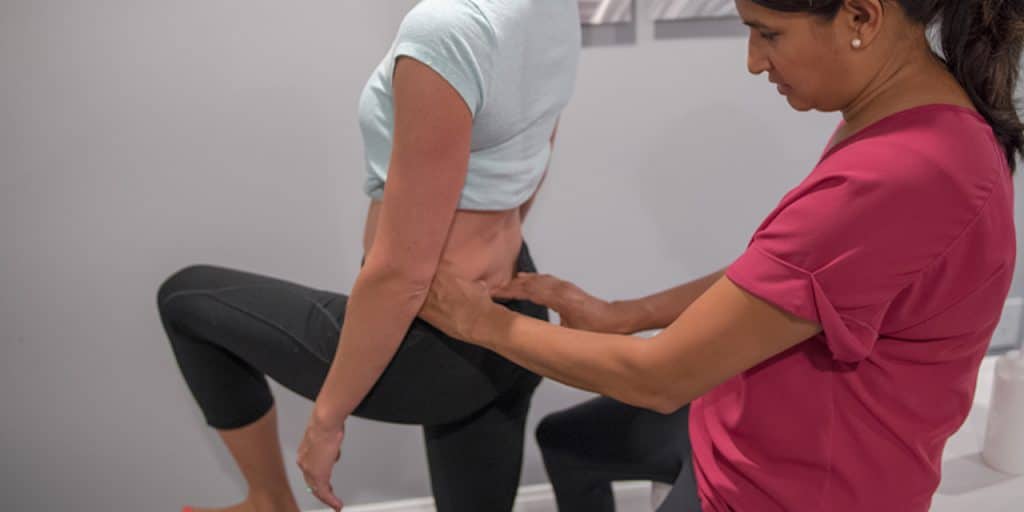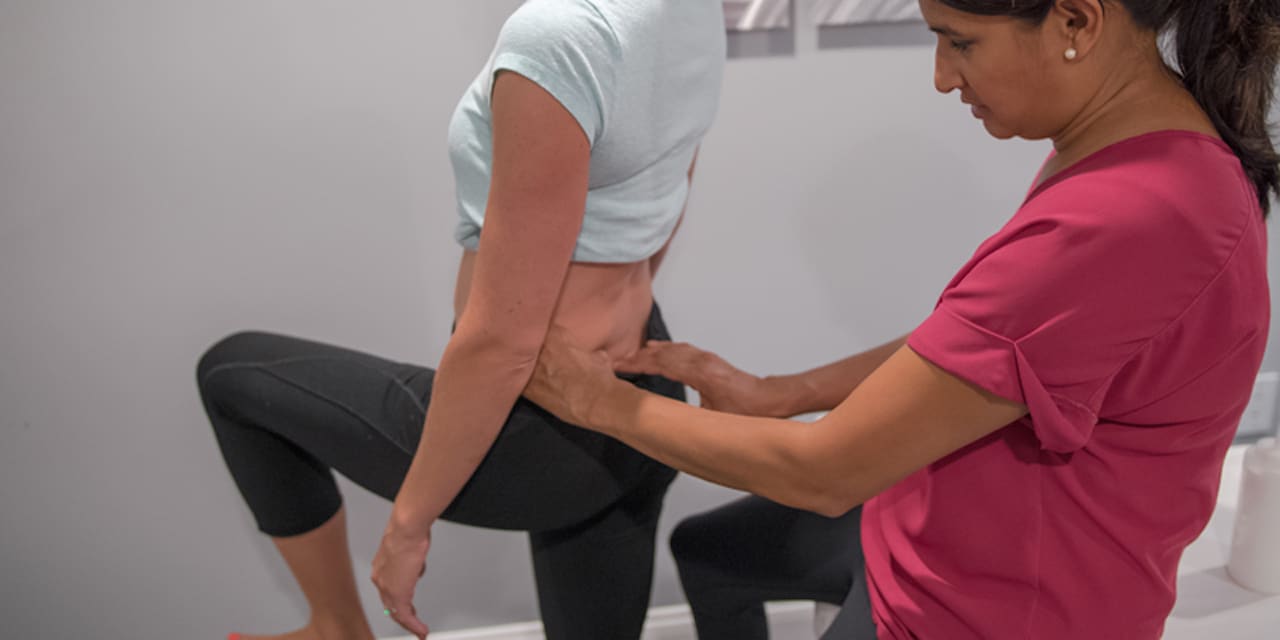
Most people need 6 to 12 sessions of pelvic floor therapy, and many notice a positive change within the first few weeks. Lasting change often takes around three months, because muscles and nerves adapt on a biological timeline. The biggest factor in how quickly you improve is what you do between visits.
That last point is the one most people are never told. An hour a week with a therapist is a small slice of your week. The other 167 hours decide how well the work sticks. Therapy happens in the clinic. Recovery happens at home.
What the research says about timing
Three months is not an arbitrary number. In the UK, the National Institute for Health and Care Excellence (NICE) recommends at least three months of supervised pelvic floor muscle training as the first treatment for stress and mixed urinary incontinence. A 2018 Cochrane review of 31 trials involving 1,817 women concluded that pelvic floor muscle training can cure or improve the symptoms of stress incontinence and other types of urinary incontinence. Women with stress incontinence who did the training were eight times more likely to report being cured than women who did not.
Muscles change in stages. Control and coordination often improve first, which is why many people feel a difference early. Strength and endurance take longer to build, and they are what keep symptoms from creeping back.
What a typical plan looks like
- The first visit. A 55-minute, one-on-one evaluation covering your history, how you move and breathe, and, with your consent, an internal assessment. You leave with a diagnosis and a plan.
- The first few weeks. Hands-on treatment plus a short home program. This is when most people notice the first changes.
- The middle stretch. Exercises progress, and visits space out as you take over more of the work yourself.
- Discharge. You finish when you reach the goals set at the first visit, with a plan to keep the gains.
Your therapist sets the expected number of visits and clear discharge goals at that first appointment, so you know what finished looks like before you commit. If the first visit makes you nervous, here is what to expect during a women’s health PT evaluation.
What speeds recovery up, and what slows it down
Six to twelve sessions is an average, and everyone is different. In our experience, the pattern looks like this.
Often faster: postpartum symptoms such as leaking after birth, and more recent or acute problems.
Often slower: chronic conditions, problems that involve several parts of the body, such as pelvic pain alongside hip or back pain, and significant other health conditions.
When you should notice a change
We usually expect some positive change within the first few weeks. That is not the finish line, but it is a sign the plan is working: fewer leaks, a little less pain, or something that used to hurt becoming easier.
If nothing has shifted after a few weeks, that is worth raising, because the plan should change rather than simply repeat.
Life outside the clinic plays a part too. Poor sleep, stress, constipation and heavy lifting, whether at work or with small children, all put demands on the pelvic floor. A good plan accounts for your real week, because a plan that ignores it is one you will not follow.
Why some people need longer
Of the 75 to 100 pelvic floor patients we see every week, about half have already had pelvic floor physical therapy somewhere else. Some want a different approach. Others feel they never got where they wanted to be. These are often people with long-standing symptoms who have tried several treatments, so recovery can take longer.
It is also where time makes the difference. Every visit at Rebalance is one-on-one. It is a big part of why we chose to work out of network, and it gives us room to evaluate thoroughly, treat more than one part of the body when the problem calls for it, and focus on hands-on manual therapy.
The biggest factor is you
Hina Sheth, founder of Rebalance PT, puts it plainly: “Our goal is to help you feel better so that you can comfortably begin and progress through a therapeutic exercise program. Good follow-through on your home program can make a meaningful difference to your recovery.”
The home program is usually short, often a few minutes a day rather than an hour. The people who progress fastest attach it to something they already do every day, so it stops being a decision.
If you want to know what your own timeline might look like, pelvic floor physical therapy at Rebalance starts with that one-on-one evaluation, and you leave knowing roughly how many visits to expect.
We see patients across Philadelphia and the Main Line, with clinics in Center City and Narberth. Book a free 15-minute phone consultation. It is a no-pressure call to talk through your symptoms and what makes sense next.