You have been told nothing is wrong. The scans came back clean. Your bloodwork looks normal. And yet the pain is still there, shaping what you can sit through, who you can be intimate with, what you wear, where you travel.
If that sounds familiar, you are not making it up. Pelvic pain in women is one of the most consistently under-diagnosed problems in medicine, and one of the most consistently responsive to a treatment almost no one sends you for: pelvic floor physical therapy. That is the gap Rebalance Physical Therapy was built to close.
What pelvic pain actually is
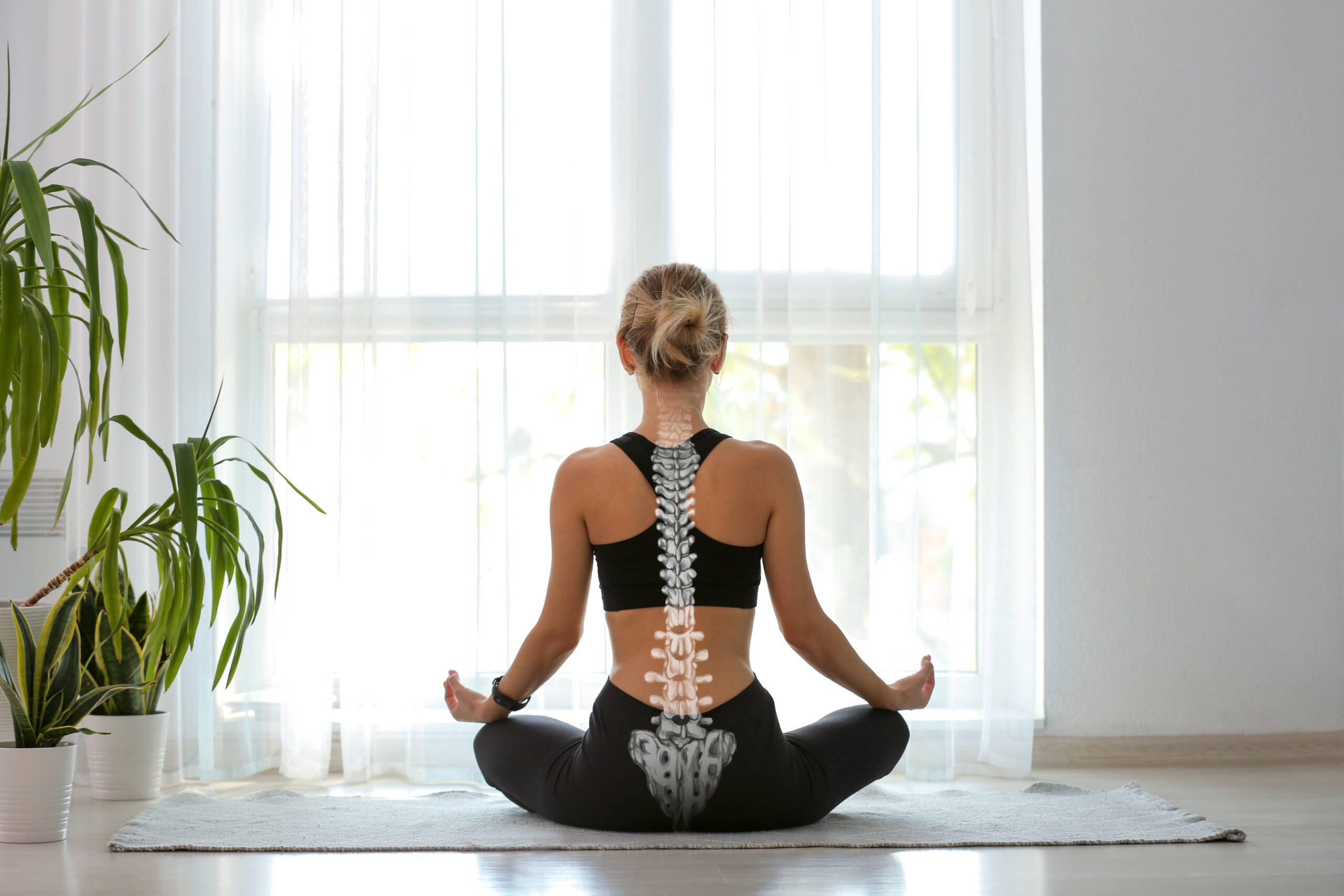
Pelvic pain is any pain felt between your hip bones and your pubic bone, including deep inside the vagina, rectum, or bladder. It can be sharp, achy, burning, or pressure-like. It can show up during sex, during your period, when you urinate, when you sit too long, or apparently out of nowhere.
If it has lasted longer than six months, the medical name for it is chronic pelvic pain. Roughly one in seven women lives with it. Most of them have never been offered pelvic floor PT as part of their care, which is the single most fixable thing about this whole problem.
Why nobody figured it out before now
Most pelvic pain does not show up on imaging. MRIs, ultrasounds, CT scans, and bloodwork cannot see muscle tension, fascial restrictions, or a nervous system that has learned to keep the alarm switched on. When your tests come back normal, the conversation usually stops. Normal does not mean nothing is wrong. It means the wrong test was used.
Most physicians also receive very little training in pelvic floor function. Even excellent ones tend to think of the pelvis as plumbing rather than as a working set of muscles, fascia, nerves, and joints. The muscles and tissues are where the answers usually are.
The conditions we see most often
Below are the patterns of female pelvic pain that show up most often in our clinic. Most patients have more than one of these layered on top of each other.
Pelvic floor dysfunction. The pelvic floor muscles can be too tight, too weak, or some uneven combination of both. Tight muscles cause pain. Weak ones cause leaking or pressure. The tight version is the most common source of pelvic pain, and the most frequently misdiagnosed. Kegels make it worse. The treatment is the opposite: release, breath, and relaxation work.
Endometriosis. Even after laparoscopy or hormonal management, the muscular and fascial patterns from years of inflammation keep the pain going. Pelvic floor PT for endometriosis works alongside your medical team, not instead of it.
Painful intercourse and vaginismus. Pain with sex is almost never psychological at root. It is usually the pelvic floor guarding after a difficult birth, an uncomfortable exam, a period of high stress, or simply learned protective tension. The body learned to brace. PT for vaginismus teaches it that the bracing is no longer needed.
Interstitial cystitis and painful bladder syndrome. A constant low-grade bladder ache combined with urgency and frequency. The pelvic floor is almost always involved. PT for IC reduces flare frequency and intensity in most patients who try it.
Pudendal neuralgia. Burning or shooting pain through the perineum and vulva, often worse with sitting. Most women with pudendal neuralgia have been misdiagnosed for years before someone finally points to the nerve.
Vulvodynia. Chronic vulvar pain with no obvious skin condition or infection. One of the most frustrating diagnoses to live with, and one of the most responsive to careful layered PT.
Post-surgical scar tissue. C-sections, hysterectomies, episiotomies, abdominal surgery. Scar tissue pulls on the surrounding fascia and creates pain long after the incision has healed. Release the fascia and the pain often comes with it.
What pelvic floor PT actually looks like
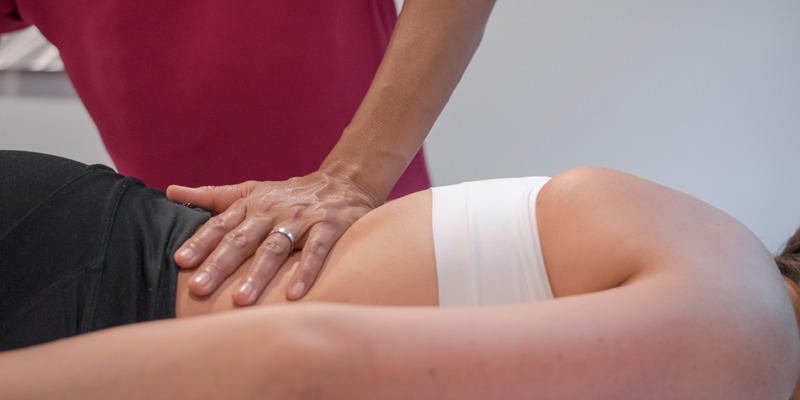
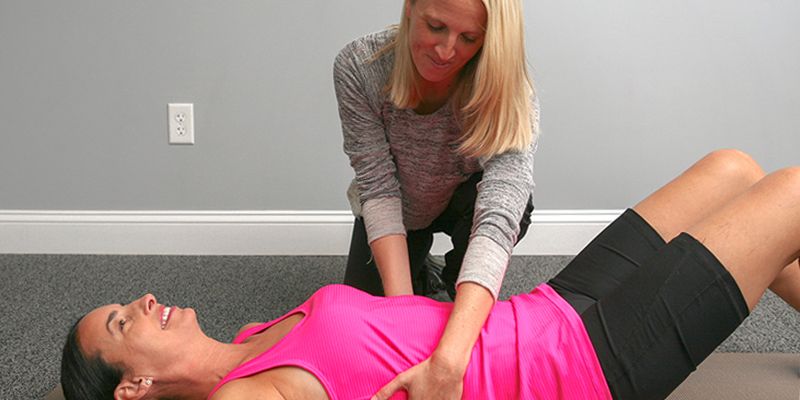
Pelvic floor PT is not the same as general physical therapy. A pelvic floor specialist has additional training in the muscles, nerves, fascia, and organs of the pelvis. At Rebalance, your first visit is mostly conversation. We listen, we ask, we watch how you move and breathe. The physical exam follows.
An internal pelvic floor assessment is often the most useful piece of information we can get, but it is never required on the first visit and never happens without your explicit consent. You set the pace. Always.
After the evaluation, treatment combines hands-on manual therapy, breathwork, alignment correction, specific movement re-education, and a short home program. Pelvic pain is rarely fixed by exercises alone, which is why a Kegel-only routine usually goes nowhere or makes things worse.
How long this takes
If your pain is relatively recent and mostly muscular, you may feel real change inside four to six visits. If it has been there for years and now involves layered patterns of scar tissue, postural compensation, breath-holding, and central nervous system sensitisation, the timeline is longer. Months, not years. After your first evaluation, we will tell you in concrete terms what your case looks like.
You can feel better
Female pelvic pain has been overlooked by medicine for far too long. You deserve someone who will sit down, listen properly, look at the whole picture, and treat what is actually causing the pain. If anything in this guide sounded like your story, we would love to talk.
Book a free 15-minute phone consultation with our team. We see patients at our Center City Philadelphia and Main Line Narberth clinics, and the call is a no-pressure way to find out whether what we do is the right fit for what you are dealing with.