Low back pain treatment works best when it targets the cause rather than the symptom. Physical therapy assesses how you move, loads the tissue progressively, and addresses the hip, core and pelvic contributors most scans never show. For the large majority of cases, it outperforms imaging, injections and surgery.
Around 80 percent of adults will experience low back pain at some point. It is the leading cause of disability worldwide. And it is one of the most over-imaged, over-medicated and under-treated conditions in modern healthcare.
Here is the uncomfortable fact underneath most back pain care. If you scan a hundred pain-free forty-year-olds, a large proportion will show disc degeneration, disc bulges and other findings on MRI. Those people have no symptoms. Which means the finding on your scan may or may not have anything to do with why your back hurts. Treating the picture instead of the person is how people end up with three years of failed interventions.
What is actually causing your back pain
In our clinic, most low back pain traces back to one of a handful of patterns. None of them are visible on an MRI.
- Hip restriction. When your hips do not rotate or extend properly, your lumbar spine takes the movement instead. It was not built for that. This is probably the single most common driver we see, and it is why treating only the back so often fails.
- Poor load transfer through the core. The deep abdominal wall, diaphragm and pelvic floor work together to manage pressure. When that system is not coordinating, the spine absorbs forces it should not. This is why postpartum women and desk workers end up with similar back complaints for very different reasons.
Sacroiliac joint dysfunction. The SI joint sits where the spine meets the pelvis. When it is not moving symmetrically, pain typically presents as a one-sided ache just below the belt line, often mistaken for lumbar pain.
Gluteal and deep hip muscle involvement. Trigger points in the glutes and piriformis refer pain into the low back and down the leg convincingly enough that patients are frequently told they have a disc problem when they do not.
- Fascial restriction. Old scar tissue, previous injuries, abdominal surgery. Fascia is continuous. Restriction in one region pulls on another, and the place that hurts is often not the place that is causing it.
What treatment actually involves
A first appointment is roughly half conversation, half assessment. We want your history, what makes it worse, what makes it better, what you have already tried, what you cannot currently do that you want to do again.
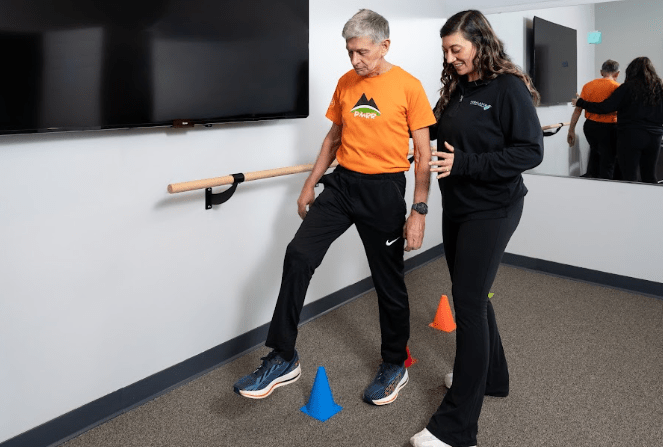
Then we watch you move. Bending, squatting, walking, rotating, standing on one leg. Movement tells us considerably more than a static exam. We assess hip mobility, core coordination, breathing mechanics, spinal segment mobility, and we palpate for trigger points and fascial restriction through the back, glutes and abdomen.
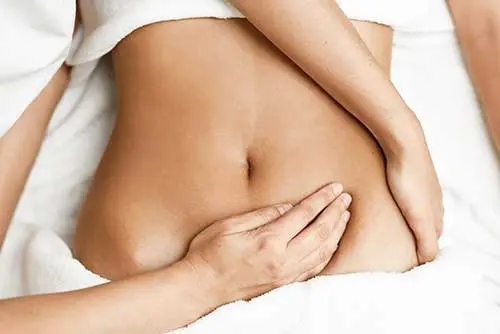
From there, treatment is layered. Hands-on manual therapy releases restricted tissue and mobilises stiff joints. Dry needling addresses trigger points that manual work cannot reach. Then the part that determines whether relief lasts: progressive loading and movement retraining, so the tissue can handle what your life actually demands of it.
Hina Sheth, founder of Rebalance PT and a board-certified orthopedic clinical specialist, is direct about this with patients: “Manual therapy buys you a window where the tissue moves better. What you do inside that window decides whether the pain comes back. Passive treatment alone is a rental, not a purchase.”
What the evidence supports
Clinical guidelines from the American College of Physicians recommend non-pharmacological treatment as the first line for both acute and chronic low back pain. Physical therapy, exercise and manual therapy sit at the top of that list. Imaging is explicitly not recommended for routine low back pain in the absence of red flags, because it changes outcomes rarely and drives unnecessary intervention frequently.
Research consistently shows that early physical therapy reduces downstream costs, imaging, injections and surgical referrals. That is not a marketing claim. It is one of the better-established findings in musculoskeletal care.
What genuinely helps at home
Keep moving. Prolonged bed rest makes acute back pain worse, not better, and the evidence on that is unambiguous. Walk as much as symptoms allow.
Change position often. Whatever posture you are holding for hours, the problem is usually the duration rather than the posture itself. Sitting is not destroying your spine. Sitting in one position for nine hours might be doing you no favours.
Stop stretching your low back repeatedly if it feels tight. Persistent tightness in the lumbar spine is often protective guarding around a hip or SI joint that is not moving properly. Stretching the guard does not fix the reason it is there, and it can extend the problem.
Heat over ice for chronic muscular back pain. Ice has its place in acute inflammatory injury. It is generally the wrong tool for a back that has hurt for six weeks.
When to seek help sooner
Most back pain is mechanical and improves. A small proportion is not. Seek prompt medical assessment for progressive weakness in a leg, numbness in the groin or inner thighs, loss of bowel or bladder control, unexplained weight loss alongside back pain, fever, or pain following significant trauma. These are uncommon, but they warrant same-day attention rather than a course of physical therapy.
Getting started
If your back pain has lasted more than a few weeks, keeps returning, or is limiting what you can do, a proper movement assessment is worth considerably more than another scan. We treat low back pain at our Center City Philadelphia and Narberth clinics, using one-to-one manual therapy rather than a room full of equipment and a shared therapist.
Book a free 15-minute phone consultation to talk through what you are dealing with and whether we are the right fit.