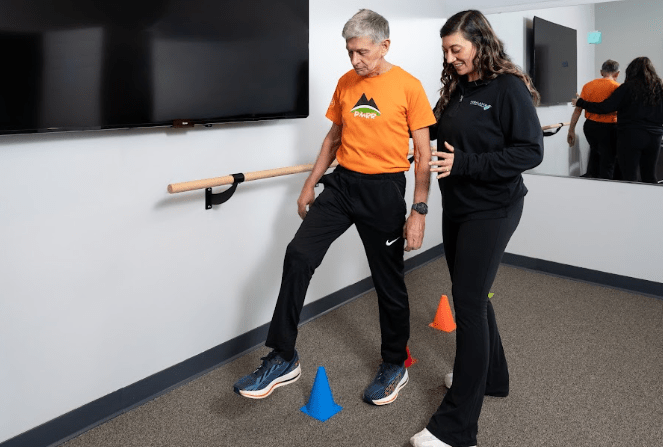
The right physical therapist helps you recover more quickly, move more effectively, and stay pain-free. The wrong one keeps you stuck in frustration and wasted effort. A good PT listens actively, builds personalised plans, educates you about pain, and orients treatment on long-term vision
Why Choosing the Right PT Matters
When your body is in pain, physical therapy is a great way to regain control. However, every therapist treats differently. Some are patient and detail-oriented, while others can be less skilled and generic. Finding the right one for you speeds up the recovery process, secures the results better, and saves you money in the long term. In this article, we will guide you through the process of finding the right PT. Though there are nuances, we break it down in steps and charts for easy digestion. Read on!
Good vs Bad — Quick Glance
| Good PT | Bad PT |
|---|---|
| Takes time to assess and listen | Rushes through and hands you a generic plan |
| Adjusts your treatment as you improve | Repeats the same exercises every visit |
| Explains what’s happening and why | Gives no education or context |
| Focuses on long-term recovery | Focuses only on quick pain relief |
To put it simply, good PTs demonstrate three key elements: Personalisation, progression, and clarity. They adapt to your needs and progress based on your unique condition; less experienced ones are often too generic and do not tackle the root cause of your pain. Research shows only about half of PT treatments for musculoskeletal issues follow evidence-based guidelines (BMJ Open), underscoring why it’s vital to choose a therapist who practices with proven methods.
So, how exactly can you find the right PT? Stress none, we mapped out 5 essential steps to help you through the process. Chat with a new therapist and evaluate accordingly.
Step 1: Clarify Your Condition and Your Goal
The first step begins with you. Ask yourself what’s wrong with your body, and what is your goal? For example, did you suffer from sports injuries and have swollen knees or need postpartum recovery? Understanding the pain type narrows down your initial search. Refer to the chart below accordingly.
Understand the Type of Pain
| Pain Pattern | Likely Category | Best PT Type to Look For |
|---|---|---|
| Sharp pain from lifting, twisting, or sports | Acute / Sports Injury | Orthopaedic or sports-rehab PT |
| Stiffness or dull ache from sitting or posture | Postural / Overuse | Manual-therapy or mobility-focused PT |
| Core weakness, pelvic heaviness, or leakage after childbirth | Postpartum / Pelvic Floor | Women’s-health or pelvic-floor PT |
| Recurring pain or tension from old injuries | Chronic / Re-injury | Integrated or long-term rehabilitation PT |
Define Your Functional Goal
After finding out your pain type, let’s define your functional goal. Rather than ‘get rid of pain’, the more specific the better. If you don’t know where to start, below are some examples.
- “I want to lift my toddler without pain.”
- “I need to run 5 km again for training.”
- “I want to sit through workdays without my neck tightening.”
- “I’d like to feel confident and strong after pregnancy.”
The clearer your condition and goals, the easier it becomes to choose a PT who specialises in that area—whether it’s orthopaedic, pelvic health, or athletic performance. For residents in Philadelphia, if you’re unsure where your issue fits, start with Shoulder pain treatment Philadelphia for stiffness, limited range, or frozen-shoulder-type pain, or Postpartum therapy Philadelphia for core and pelvic-floor recovery.
Step 2: Check Credentials, Licensure, and Specialisation
The next step is to confirm your therapist’s credentials. Regardless of how experienced they are, PTs in Philadelphia must meet national standards before offering service. Licensed and specialised therapists are legally accountable for your care, give you the confidence and safety necessary.
How to check credentials:
- Licensure: Every PT in the U.S. must hold a valid state license. In Pennsylvania, you can verify this through the PA Department of State License Verification portal.
- Education: Look for a Doctor of Physical Therapy (DPT) degree (or MPT for long-practicing PTs with active continuing education).
- Specialisation: Board certifications from the American Board of Physical Therapy Specialties (ABPTS) indicate expertise in areas like orthopaedics (OCS), women’s health (WCS), or sports (SCS).
The clinic’s website often lists out the credentials for you. Check via the verification portal before committing yourself to your PT. If not listed, bring out the question without hesitation — qualified PTs are transparent about their credentials.
Step 3: Ask These Questions Before Booking
Now you are meeting the therapists. The initial consultation is the best chance to learn about them. An experienced therapist knows your condition, creates a personalised plan, and provides all the necessary elements to secure treatment success. Ask the following question to evaluate accordingly.
- Experience with your condition: Your PT needs to be an expert and have good experience treating your pain type. They can easily describe your problem, tell you things to expect and provide typical results from experience.
- Personalised plan: There’s no one-size-fits-all treatment in physical therapy. Good PTs develop a plan by assessing your unique condition through posture, habits, and goals.
- Hands-on techniques: Great PTs offer manual therapy service such as myofascial release or joint mobilisation to speed up your recovery.
- Consistency of care: You should see the same therapist regularly. Switching between providers slows progress.
- Tracking progress: Your PT should measure results with clear benchmarks—mobility, strength, or pain levels—not vague reassurances.
- Patient education: The great PTs educate you about the mechanics of pain and the reasons for doing the assigned exercise. Knowledge is power, and it helps you to regain control of your own.
- Accessibility and environment: Flexible scheduling, private sessions, and a calm clinic make it easier to stay consistent.
Step 4: Look for Focused, One-on-One Care
When you’re in physical therapy, every session should feel personal. You’re not just another patient on a rotation — your therapist should be watching how you move, adjusting exercises in real time, and helping you understand what’s happening in your body. That’s only possible when they work with you one-on-one, not while supervising three other clients at the same time.
A great PT also looks beyond the single sore spot. They examine posture, movement patterns, muscle balance, and lifestyle factors that contribute to pain. This “whole-body approach” helps fix the root cause instead of chasing symptoms. For example, knee pain might stem from weak hips or poor ankle mobility — and unless your therapist connects those dots, the pain will keep coming back.
Before you commit, ask how the clinic runs its sessions. If they emphasise individual attention, hands-on work, and tailored exercises, you’re in the right place. If appointments sound rushed or group-based, you may not get the detail and focus your recovery deserves.
Step 5: Check Reviews Before You Commit
Before booking, take five minutes to read what other patients say online. Reviews reveal far more than any brochure — they show whether people felt heard, improved, and supported. You can find reliable feedback on Google Reviews, Birdeye, or Healthgrades.
Good review examples:
- “My therapist explained every step and adjusted my plan weekly — I’m finally pain-free.”
- “Private sessions, no rush, and they actually listened to my concerns.”
- “Hands-on techniques made a big difference. I felt results after the first few sessions.”
Bad review examples:
- “They gave me the same exercises every time and didn’t check if I was improving.”
- “Felt like a factory — multiple people treated at once, very little attention.”
- “They mostly used machines. No manual work, and progress was slow.”
Look for reviews that highlight personal attention, education, and steady progress. Avoid clinics where people mention long waits, inconsistent therapists, or lack of explanation — these are red flags that care might be inconsistent.
⚠️Quick Red-Flag Cheat Sheet
Tick any that apply — if you check more than one, it might be time to look elsewhere.
☐ Different therapists treat you during every visit
☐ You share your session with other patients
☐ They don’t track your progress or update the plan based on stages
☐ Do not explain or educate you about the condition
☐ They don’t change your plan when your condition is not improving
☐ Scheduling is inconsistent or often booked out
Why Rebalance Physical Therapy Is the Right Fit
Patients across Philadelphia consistently highlight the same requirements: thorough assessments, genuine listening, and results that last. Whether you’re dealing with frozen shoulder, postpartum recovery, or chronic pain, Rebalance offers the kind of focused, individualised care that makes all the difference.
If you’re ready to move confidently again, don’t wait to start your recovery journey — book your evaluation at Rebalance Physical Therapy and experience how the right PT can change everything.